Entertainment
A broad activity engaging audiences through pleasure, insight, and cultural expression.

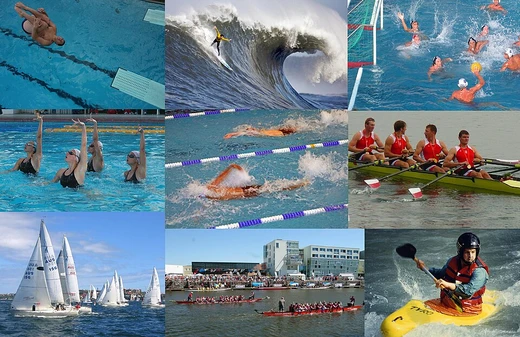
Entertainment is a form of activity that holds the attention and interest of an audience or gives pleasure and delight. It can be an idea or a task, but is more commonly one of the activities or events developed over thousands of years specifically to engage an audience. Although people's attention is captured by different things due to individual preferences, most forms of entertainment are recognisable and familiar, including storytelling, music, drama, dance, and various kinds of performance that exist in all cultures.
- field
- Entertainment
- known_for
- Providing amusement, pleasure, and intellectual insight through diverse forms such as storytelling, music, drama, dance, games, and performance
- key_forms
- Storytelling, music, drama, dance, games, film, video games, festivals, spectator sports
- audience_role
- Passive (watching) or active (participating)
- etymology
- From Latin inter (among) + tenir (to hold), meaning 'to hold mutually' or 'to engage'
Lore & Background
Entertainment has evolved over thousands of years, with storytelling, music, drama, and dance appearing in all cultures and being supported in royal courts before becoming available to the general public. Modern times accelerated this through an entertainment industry that records and sells products. Entertainment can be adapted to any scale, from an individual choosing private pre-recorded products to global audiences. The experience of being entertained is strongly associated with amusement, though many entertainments serve serious purposes such as ceremony, celebration, religious festival, or satire, and may also be a means of achieving insight or intellectual growth.
Reader's Guide
Entertainment's significance lies in its universal presence across cultures and its ability to adapt to technological and social changes. It has persisted for centuries, evolving from activities like hunting or fencing into spectator sports, and from cooking into global competitions. The audience is a key aspect, transforming private recreation into entertainment, whether passive (watching a play or film) or active (participating in games). Entertainment can cross into different media, ensuring continuity of themes and structures. It is distinguished from education and marketing, though these fields sometimes borrow its appeal, creating blends like edutainment or infotainment. Some entertainment, such as public executions, is now illegal in most countries. What is entertaining for one group may be considered work or cruelty by another. Entertainment may also go beyond gratification to produce insight, skilfully considering universal philosophical questions such as the meaning of life, as seen in works like Shakespeare's Hamlet or The Matrix.
Did You Know?
- The word 'entertain' derives from Latin inter (among) and tenir (to hold), meaning 'to hold mutually' or 'to engage'.
- Some entertainment, such as public executions, is now illegal in most countries.
- Activities like fencing or archery, once used in hunting or war, have become spectator sports.
- The Hitchhiker's Guide to the Galaxy began as a radio comedy and later appeared as a novel, film, television series, stage show, comic, audiobook, LP record, adventure game, and online game.
The Art of the Open Secret
Sports entertainment occupies a distinctive space between competition and theater. Rather than producing a winner through pure athletic contest, what it sells above all is the experience of watching a show. Events are wrapped in theatrical flourish and extravagant presentation, making the spectacle itself the central product. A defining characteristic—though not universal across all formats—is that outcomes are predetermined. Yet this is not treated as the scandalous act of match fixing. Because audiences are generally aware that results are scripted, the practice functions as an open secret, separating the genre from traditional sports and games, which are conducted for genuine competition, sportsmanship, physical exercise, or personal recreation. A performer's success is measured not by an objective score but by the crowd's reaction and the commercial viability of the entertainment product. Even so, many performers maintain high athleticism, undergo rigorous training, and face genuine physical demands and injury risk, blurring the line between pure showmanship and real athletic endeavor.
Naming the Genre
The phrase 'sports entertainment' did not emerge from academic debate but from the marketing offices of the World Wrestling Federation. Vince McMahon, the former WWF chairman (the organization now known as WWE), coined the term during the 1980s as a pitch to potential advertisers, reframing professional wrestling in more palatable commercial language. The term also carried legal weight. This maneuver highlighted how the label was as much a shield against regulation as it was a marketing tool, cementing the genre's identity in both commercial and legislative contexts.
A Spectrum of Spectacle
Sports entertainment encompasses a remarkably wide range of formats. Some events are essentially variants of established sports reimagined for showmanship, such as the exhibition basketball of the Harlem Globetrotters or the stylized baseball of the Savannah Bananas. Others take a real sport and reshape it for theatrical purposes; many forms of professional wrestling evolved from traditional wrestling, while modern Major League Baseball games often feature inter-inning mascot races that prioritize comedy over competition. Roller derby, popularized as a sports entertainment spectacle in the 1970s, has since evolved into a legitimate competitive discipline in its modern iterations. Monster truck shows occupy a contested middle ground: their competitive events are unscripted, governed by legitimate rules and safety requirements, yet the shows also emphasize stunts, flashy truck designs, driver personalities, and theatrical production. Freestyle skills competitions at these events are judged subjectively, with results shaped by crowd reaction rather than objective metrics. This spectrum illustrates that sports entertainment is less a single genre than a philosophy of presentation layered over athletic or quasi-athletic activity.
The Stigma of Spectacle
Despite its commercial success and dedicated fan bases, sports entertainment carries a persistent cultural stigma. It is frequently dismissed as mindless, low-level pop culture, and in some cases criticized for glorifying violence purely for the sake of audience amusement. Popular media has often reinforced this perception through lampooning—mocking the genre, its performers, and its audiences as evidence of a broader cultural decline in taste. This critical framing positions sports entertainment at the opposite end of the spectrum from serious sport, where the emphasis is on objective achievement, sportsmanship, and personal development. The tension is compounded by the genre's reliance on subjective performance metrics: success is gauged by crowd reaction and commercial viability rather than by a score or a time. Critics see this as evidence that the product prioritizes spectacle over substance. Yet the very existence of the open secret of predetermined outcomes, combined with the genuine athleticism and physical risk many performers endure, makes the genre resistant to simple categorization as either pure sport or pure theater.
Frequently Asked Questions
What is Entertainment in the context of sports and recreation?
Entertainment refers to any activity or event designed to capture an audience's attention and deliver pleasure, delight, or intellectual stimulation. It spans a wide range of expressions, from storytelling and music to spectator sports and games, and has been shaped over thousands of years across every culture.
What are the main forms Entertainment takes?
The most commonly recognised forms include storytelling, music, drama, dance, games, film, video games, festivals, and spectator sports. These can be experienced passively by watching or actively by participating directly in the activity.
Where does the word 'Entertainment' come from?
The term traces back to the Latin roots inter (meaning 'among') and tenir (meaning 'to hold'), giving it the sense of 'to hold mutually' or 'to engage' between people. This etymology underscores the reciprocal relationship between performer and audience at the heart of the concept.
What role does the audience play in Entertainment?
Audience members can engage either passively, as spectators observing a performance or event, or actively, by taking part in games, festivals, or interactive experiences. Both modes are considered valid ways of receiving the amusement and insight that Entertainment provides.
Why is Entertainment considered important in the sports and recreation field?
It serves as a vehicle for cultural expression, communal bonding, and personal enjoyment, offering both physical and mental engagement. By providing amusement alongside intellectual insight, it sustains traditions and creates shared experiences that define recreational life in every society.
More in Sports And Recreation 1-16
Spotted an error? Know more?
This is a living reference — every entry is fact-audited, and reader corrections feed straight into our audit queue. Suggest an edit · See this site's audit record