Board game
Tabletop game using pieces on a patterned board.

A board game is a type of tabletop game that involves small objects (game pieces) placed and moved in particular ways on a specially designed patterned game board, potentially including other components such as dice. The earliest known uses of the term "board game" are between the 1840s and 1850s. While game boards are a necessary and sufficient condition of this genre, card games that do not use a standard deck of cards, as well as games that use neither cards nor a game board, are often colloquially included, with some referring to this genre generally as "table and board games" or simply "tabletop games."
- earliest_known_term
- 1840s–1850s
- oldest_archaeological_game_boards
- c. 7000s BC – c. 6000s BC (Neolithic period)
- golden_age_period
- 1880s–1920s
- renaissance_period
- late 1990s–early 21st century
Lore & Background
Board games have been played, traveled, and evolved in most cultures and societies throughout history. Archaeological finds of game boards date from as early as the Neolithic period, including 14 sites reporting 51 game boards from the early 7000s BC to the mid-6000s BC. Senet has been argued to be the oldest known board game, with possible fragments from c. The mancala family of games has highly uncertain age, with estimates ranging from c.
Reader's Guide
The 1880s–1920s were a board game epoch known as the Golden Age, where mass production made games cheaper and more available. In the late 1990s, companies began producing more new games for a growing worldwide market. Board games vary in their reliance on luck, strategy, and diplomacy. Many games require both skill and luck, with elements such as dice, cards, spinners, or timers introducing randomness. German-style board games are notable for often having fewer elements of luck than many North American board games. Diplomacy, involving players making deals, is an important aspect of some games like Catan and Risk. Many board games are now available as digital versions, playable online against a computer or other players.
Did You Know?
- The earliest known uses of the term "board game" are between the 1840s and 1850s.
- Archaeological finds of game boards date from as early as the Neolithic period, around 7000s BC.
A Taxonomy Built on Immersion
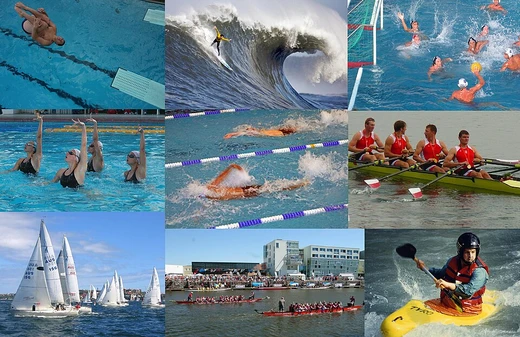
Water sports are organized not by equipment or venue but by how deeply the participant enters the water. This three-tier framework—on the water, in the water, and under the water—creates a natural taxonomy that spans everything from yachting and sailing to synchronized swimming and freediving. At the surface level, athletes and recreationists interact with waterbodies while remaining above or partially on top of them, whether paddling a kayak, riding a wave on a surfboard, or towing behind a motorboat on a wakeboard. The middle tier involves full submersion of the body, encompassing swimming, water polo, diving from platforms, and the synchronized routines of artistic swimming. The deepest tier pushes participants below the surface entirely, into the realm of cave diving, spearfishing, underwater hockey, and freediving. This progression from surface to depth mirrors a spectrum of risk, skill, and physical demand, making the categorization both practical and intuitive for anyone exploring the aquatic world.
Team Dynamics and Tactical Play
Several water sports elevate collective strategy above individual athleticism. Canoe polo, for instance, blends boating and ball-handling into a contact team game where positional awareness and tactical planning carry as much weight as raw speed and fitness. Dragon boat racing demands the synchronized effort of twenty paddlers working in unison aboard a single vessel. Water polo pits two teams against each other in a water-based ball game, while water basketball adapts basketball's rules to a pool setting, requiring teams of five to score within a set time after gaining possession. Even underwater, team competition thrives: underwater hockey sees two squads using short curved wooden sticks to drive a heavy puck across a pool floor toward the opposing goal, and underwater rugby and football extend similar competitive structures beneath the surface. These sports share a common thread—no single athlete can dominate the outcome without the coordinated contributions of teammates, making communication, role clarity, and shared rhythm the true engines of victory.
Solo Pursuits and the Edge of the Aquatic
At the individual end of the spectrum, water sports push participants toward personal limits in increasingly extreme environments. Canyoning combines walking, scrambling, climbing, jumping, abseiling, swimming, and rafting into a single journey through a canyon. Freediving and cave diving demand breath control and spatial awareness in environments where a single miscalculation can be fatal. Deep diving and ice diving extend the boundaries of recreational scuba into pressures and temperatures that test both equipment and nerve. On the surface, hydrofoiling has spawned an entire family of disciplines—sit-down hydrofoiling, windfoiling, and wing foiling—each using a foil to lift the rider above the water, with wing foiling adding a handheld wing for propulsion. Even seemingly simple activities like stone skipping or skimboarding carry a competitive edge, with participants vying for the most skips or the fastest glide. What unites these pursuits is the absence of a team: every decision, every breath, every maneuver rests solely on the individual's skill and judgment.
Bridging Disciplines: Where Water Meets Other Sports
Water sports frequently serve as one component within broader multi-discipline events, creating unique intersections with athletics, equestrianism, and combat sports. The triathlon chains swimming, cycling, and running into a single continuous endurance test, while the modern pentathlon adds swimming alongside épée fencing, pistol shooting, show jumping, and cross-country running. Aquajogging repurposes the pool as a low-impact training and rehabilitation space, where a flotation device allows a running motion without joint stress. Water basketball and water polo demonstrate how established land-based rules can be transplanted into an aquatic context, altering the physical demands while preserving the competitive structure. Finswimming occupies a hybrid space, appearing both as an in-the-water sport and as an underwater discipline, depending on the event. Even mermaiding and underwater photography blur the line between sport, art, and recreation. This cross-pollination ensures that water sports are never isolated; they are nodes in a larger web of human physical expression.
Frequently Asked Questions
What exactly counts as a board game?
A board game is a tabletop activity where players move small pieces across a specially designed patterned board, often using dice or other components to determine movement. The board itself is the defining requirement, though card-based and hybrid tabletop games are frequently grouped under the broader umbrella of 'table and board games.'
When did people start calling these games 'board games'?
The phrase 'board game' first appears in written records during the 1840s or 1850s, even though the physical boards themselves are thousands of years older. Before that, the activities were simply referred to by their individual names or described generically as tabletop play.
What was the 'golden age' of board games and why does it matter?
The golden age spanned roughly the 1880s through the 1920s, a period when mass-produced commercial board games became a dominant form of family entertainment. It set the design and distribution templates that shaped the industry for the next century and produced iconic titles still in print today.
More in Sports And Recreation 1-16
Spotted an error? Know more?
This is a living reference — every entry is fact-audited, and reader corrections feed straight into our audit queue. Suggest an edit · See this site's audit record